


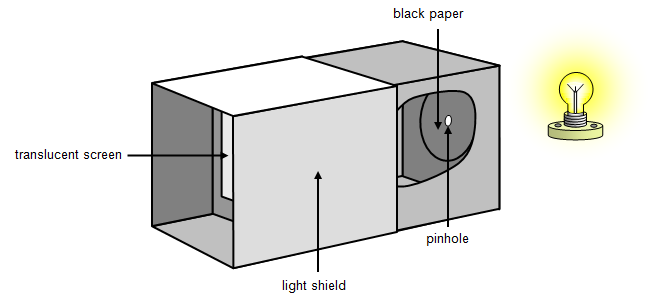
The pinhole camera is a very simple piece of
apparatus that demonstrates a number of points about the physics of light.
The pinhole
camera was first used in about 1000 AD and since then it has been a simple way of
producing a correct image of a scene. Artists from the sixteenth century onwards used a
pinhole camera to help them get the correct proportions for a painting.
In its basic
form it is simply a light-tight box with a pinhole in one end and a translucent screen
of, say, tracing paper at the other. You can see a diagram at the top of the
page.
Light from the object goes through the pinhole and produces an inverted image
in full colour on the screen. This is because only light from one point on the object can
reach a given point on the screen.
Changing the distance from the pinhole to the
object will change the size of the image as you can see from the two diagrams above. If
more than one pinhole is made in the end.
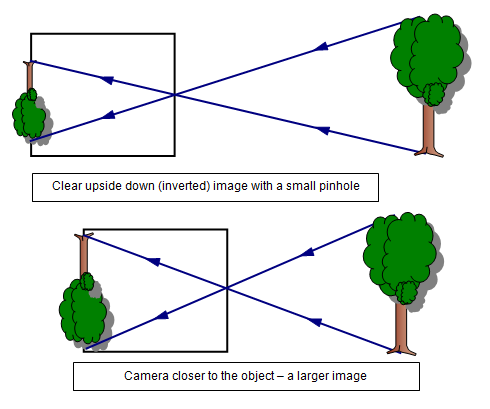
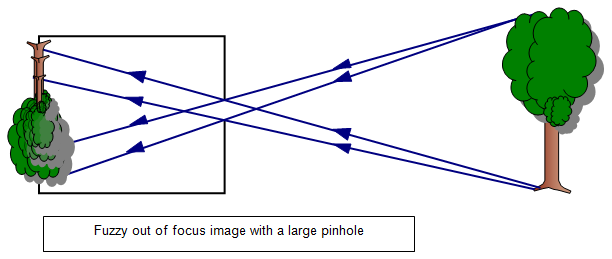
Pinhole cameras need not be focused like ordinary cameras, they are always in focus. However, if you bring a pinhole camera very close to the object you are effectively increasing the size of the pinhole and the image will become blurred. You should notice that the inside of the pinhole camera is painted black to stop unwanted reflections inside. It is also helpful to have a light shield over the back to shade the screen. The fact that the pinhole camera gives a clear image is very good evidence for the fact that light travels in straight lines.
It is possible to take a photograph with a pinhole camera providing that the object is brightly lit and that you use a long exposure. If the screen is replaced by a piece of photographic paper in the dark and the pinhole covered with a flap, the pinhole camera is ready. The object should be lit by a projector and the pinhole camera put about 1 m from the object. An exposure of 8 to 10 minutes should be something like correct. It is even possible to take "360o" photos by making a hole in each side of the camera box and using a cylindrical roll to mount the film in the centre.