

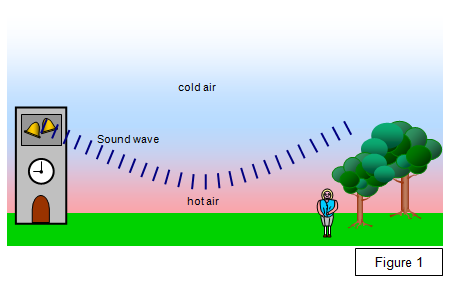
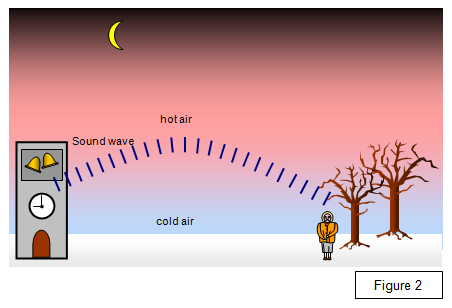
The speed of sound is greater
in hot air than it is in cold air. This is because the molecules of air are moving faster and the
vibrations of the sound wave can therefore be transmitted faster.
This means that
when sound travels from hot air to cold air or from cold air to hot air it will
refract.
You can notice this on a hot day or a cold night.
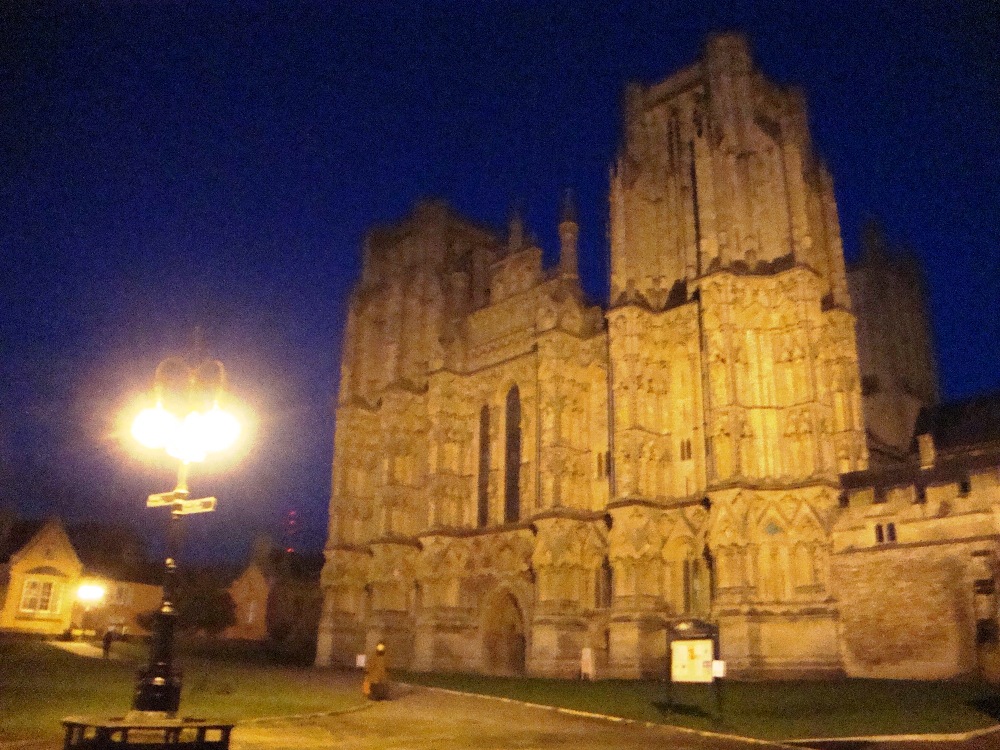
I noticed a very interesting effect produced by the change of speed of sound in air of different temperatures when I was singing in a carol service in Wells Cathedral in Somerset in the UK.
It was a clear starry night and the great stone walls of the cathedral were cold. At the end of one of the choir pieces the sound travelled away into the darkness of the building and a moment later I heard the echo as the sound reflected from the walls. The echo was not only quieter - it was flat.
The pitch of the note had gone down.
After much thought I decided that this was because it had travelled through more cold air than hot air on its way to the walls and back and so had slowed down, therefore reducing the pitch. However the reflected path and the transmitted path are the same length and so the effects should cancel so I still can't really explain it fully. Has anyone any better suggestions?