

The most important
thing about a telescope mounting used for astronomy is that it should be firm and free from
vibrations.
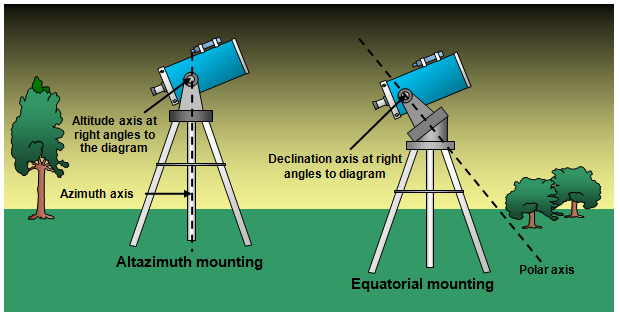
Astronomical telescopes are usually mounted in one of two ways:
(a)
altazimuth – one axis of the mounting vertical and the other horizontal
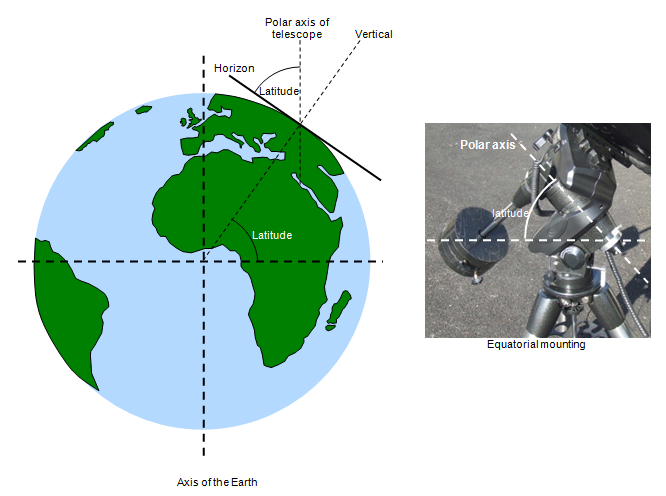
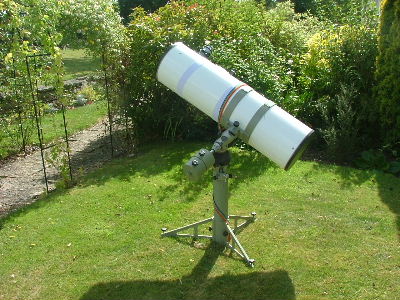
(b) equatorial –
one axis of the mounting in line with the axis of the Earth and the other at right angles to
this
The two type of mounting have advantages and disadvantages:
(a) altazimuth
(i) advantages – a relatively cheap and simple type
of mounting
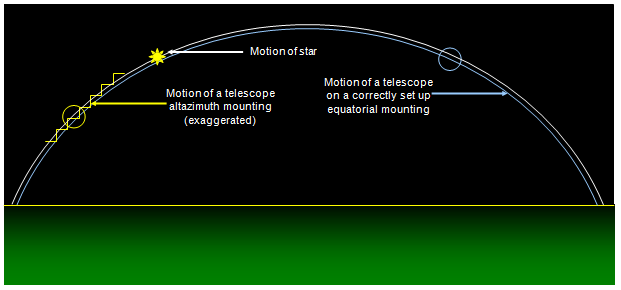
(ii) disadvantages – The telescope must be moved about both the azimuth
axis (left and right) as well as the altitude axis (up and down) to follow a star across the sky
as the Earth rotates.
(b) equatorial
(i) advantages –
because one axis (the polar axis) of the telescope is in line with the Earth's axis the
telescope has only to move about this axis to follow a star across the sky. The declination of
the telescope is fixed and then can remain unaltered if the telescope is set up
properly.
(ii) A more costly and sophisticated mounting but well worth it for the advantage
in the ease with which it can follow a star