


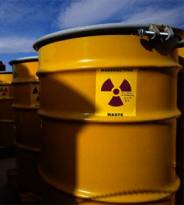
One of the major problems with nuclear power, especially fission
reactors, is the disposal of the radioactive waste. This waste is one of the things that might
stop the development of nuclear power because of political pressure about the possible
damage to the environment.
Nuclear waste is usually divided into three
types:
High level , intermediate level and low level
depending on the amount of
radioactivity present in the material.
The most radioactive is the high level waste (HLW), and the government has
decided to store it for 50 years before it is disposed of. HLW is the responsibility of UKAEA and
BNFL and is mainly irradiated fuel taken from reactors. It is not only very radioactive it also very
hot when it is taken from the reactor.
Fuel has been reprocessed to take out uranium
and plutonium still leaves a very toxic waste behind. Some of the material contains isotopes with
very long half lives so the waste will be radioactive for years after it is taken out of the
reactor.
Disposal:
This is being converted into glass blocks for storage. High level
waste is about 1000 times more radioactive than ILW, and about 100 cubic metres of HLW is
produced every year.
In the United States waste from the defence programme was
called military waste and was treated separately from civilian wastes.
One of the big
problems is that there are only a few places in the world where waste can be reprocessed
safely. This means that waste has to be transported round the globe by ship to countries that
can do this. There has been enormous concern about this and many political protests about
countries reprocessing other countries' nuclear waste material.