


All these effects
are due to a property of all waves called diffraction.
Diffraction is the bending of
waves round an obstacle or through a hole.
You can show diffraction effects with
water waves in a ripple tank, microwaves, sound and even light. The patterns for some water
wave diffraction are shown in the diagrams.
They show that:
(a) the diffraction
effects are greater for long wavelength waves
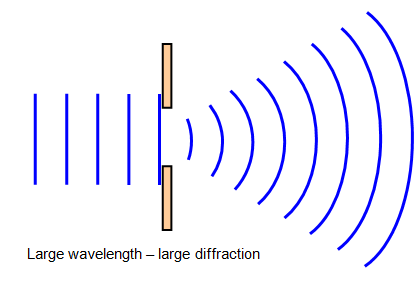
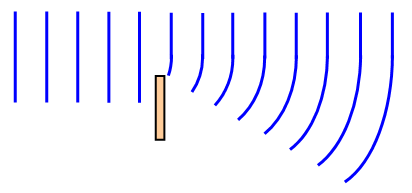
The
next diagram shows a wave bending round the edge of a barrier. This explains why it is
possible to hear sounds and receive radio signals even if there is something between you
and the source of the waves.
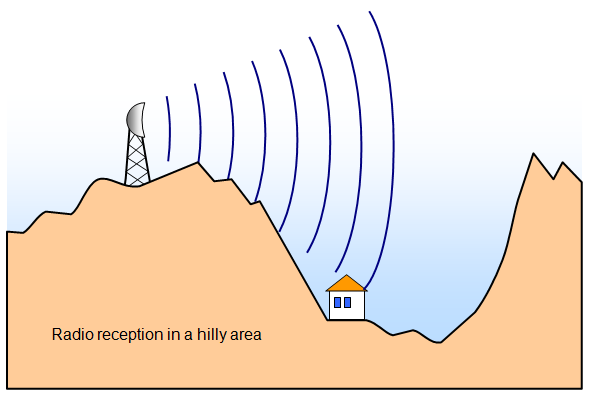
If the wavelength of the waves is shorter the
spreading, diffraction, effect is much smaller as well. This explains why television waves are
much more difficult to receive in hilly areas than radio waves which have a longer wavelength
and why the diffraction of light is so difficult to observe.
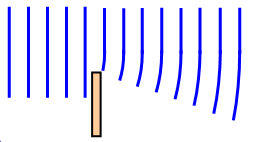
Its very small wavelength (about 600 nanometres (600 thousand millionths of a metre) for yellow light) is also the reason why diffraction of light is only big enough to be observed with very small obstacles. The fact that it can be seen at all is very good evidence for light being a wave.