Toys and Physics - Heat
energy
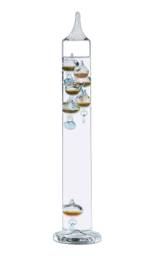
3.1 Galileo thermometer
What
happensThe sphere rise and fall as the temperature falls and rises. More of the
glass spheres are at the bottom when the temperature is high.
Theory and
teaching notesThe density of the liquid varies with temperature and so the level at
which each carefully weighted ball floats will also change. They will float at the same level as
their average density.
3.2 Heat sensitive animals
What
happens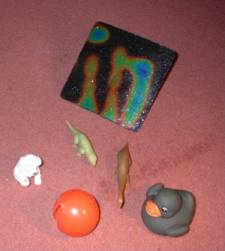
The animals change
colour when immersed in hot water.
You can also buy mugs where the design on the
outside changes when they are filled with hot liquid – some interesting effects can be
produced!
Theory and teaching notesParts of the animals are made
of heat sensitive plastic.
3.3 Heat sensitive mat
What
happensThe mat changes colour when you put your hand on it or when a
cup of hot drink is placed on it. The colour depends on the temperature of the
object.
Theory and teaching notesThe crystals are heat sensitive
and change colour as the temperature rises or falls.
3.4 Heat
sensitive Red noses
What happensAs the red nose is warmed it
changes colour. Some noses turn pink, others turn yellow.
Theory and
teaching notesThe noses are made of a plastic that changes colour when heated.
You could investigate the temperature needed for a colour change to
occur.
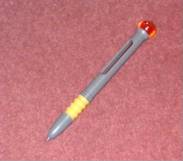
3.5 Holly's Passion pen
 What happens
When you hold the base of the pen liquid
bubbles up into the bulb.
Theory and teaching notesThe liquid is
very volatile and the heat energy from your hand is sufficient to evaporate it forcing liquid up
the stem of the pen into the bulb at the top. The hotter your hand the more liquid
evaporates.
3.6 Heart warmer
What happensThe
heart gives out heat and can be used to keep you warm.
Theory and teaching
notesThe heat can be 'regenerated' by putting it in hot water. As it cools it gives out
heat.
3.7 Radiometer
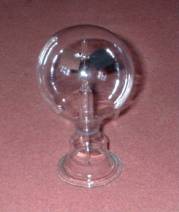 What happens
When heat radiation falls on the vanes they
spin round.
Theory and teaching notesThis is an excellent piece of
apparatus for demonstrating that dull black surfaces absorb heat radiation better than shiny
ones. The glass bulb is filled with low pressure air and as radiation falls on the vanes the
black surfaces absorb more radiation than the silvered ones, the air near them heats up -
expands and so pushes the vanes round.
Try placing a sheet of glass or a beaker of
water between the heat source (a small electric fire, candle, light bulb or bunsen burner) and
the radiometer and investigate the effect of these materials on the transmitted infrared
radiation.